
If you are starting to plan your seasonal tire changeover in Pembroke, you may be wondering whether winter tires are really necessary: or whether a good set of all-season tires is enough.
The honest answer is that winter tires are the safer choice for most drivers in Pembroke once temperatures regularly fall below 7°C. All-season tires can handle a wide range of conditions, but they are designed as a compromise. They are not engineered to provide the same cold-weather grip, snow traction, or braking performance as dedicated winter tires.
That does not mean every driver needs the most aggressive winter tire available. Your driving habits, vehicle, parking arrangements, budget, and typical routes all matter. Here is how the two options compare.
Winter tires and all-seasons are built differently
The differences are more than a snowflake symbol on the sidewall. Winter and all-season tires use different rubber compounds and tread designs to perform in different temperature ranges.
Rubber compound
Winter tires use a softer rubber compound that remains flexible in cold weather. This allows the tread to maintain contact with the road when the pavement is frozen, snow-covered, or simply very cold.
All-season tire compounds are harder and more temperature-stable during warmer conditions. As temperatures drop below approximately 7°C, that rubber can stiffen. A harder tire does not conform to the road surface as effectively, which can reduce traction even when the road is dry.
This is why the 7°C guideline matters. Winter tires are not only for days when snow is falling. They can provide better grip on cold, wet, frosty, and icy pavement too.
Tread design
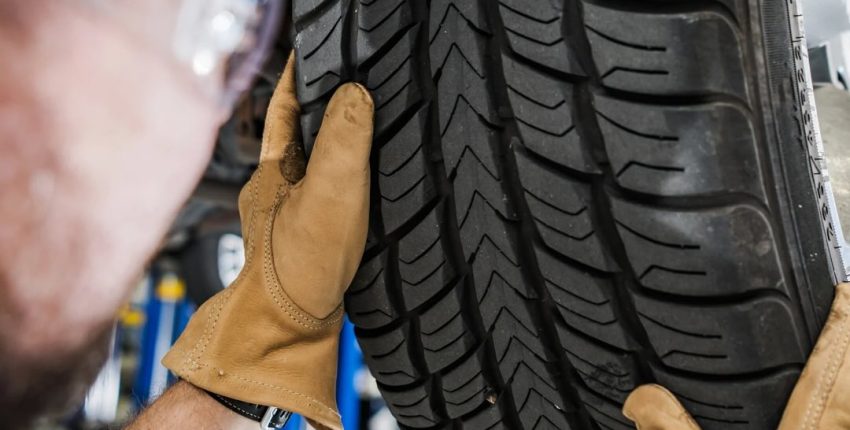
Winter tires usually have deeper, more open tread blocks with grooves designed to move snow and slush away from the contact patch. The tread is also shaped to create more edges that can grip loose snow.
All-season tires have a less specialized tread pattern. They are designed to perform acceptably in rain, dry conditions, and light snow, but they may not clear deep snow or slush as effectively.
Sipes
Sipes are the small cuts across a tire’s tread blocks. Winter tires use many more sipes than typical all-seasons. These small edges help the tire grip packed snow and provide additional traction when accelerating, cornering, or braking.
Some all-season tires do have sipes and may carry a mud-and-snow marking. However, that does not necessarily mean they offer the same winter performance as a tire marked with the three-peak mountain snowflake symbol. That symbol indicates the tire has met a recognized severe-snow performance standard.
Which tire stops sooner on Pembroke roads?
Stopping distance is one of the clearest reasons to choose winter tires.
On cold, snowy, and icy roads, winter tires can stop significantly sooner than all-season tires. Depending on the vehicle, speed, temperature, and road surface, testing has found differences of roughly 25% to 35% in winter conditions.
At 50 km/h, that difference can represent several metres: or more than a vehicle length. On a rural road around Pembroke, a few extra metres may determine whether you stop behind a vehicle or slide into it. The same applies when approaching a stop sign, descending a hill, or reacting to a vehicle that suddenly loses control ahead of you.
Winter tires can also improve steering response. Better traction helps your vehicle follow the direction of the steering wheel instead of continuing straight through a corner. They do not eliminate the risk of sliding, but they give you more control when conditions deteriorate.
Remember that no tire can make winter driving risk-free. Speed, following distance, visibility, road maintenance, vehicle condition, and driver attention remain important. Winter tires are one part of a safe winter-driving plan: not a substitute for careful driving.
What about Ontario’s winter tire laws?
There is an important date-related misunderstanding among Canadian drivers.
Ontario does not currently have a law requiring passenger vehicles to use winter tires on Ontario highways from December 1 to March 31. Winter tires are strongly recommended by the province, but they are not generally mandatory during a set calendar period in Pembroke or elsewhere in Ontario.
The December 1 date is commonly associated with Quebec’s winter tire requirement. British Columbia also has winter tire rules on many designated highways. Those requirements should not be confused with Ontario law.
You can review Ontario’s current winter-driving guidance on the Ontario government winter driving page. Transport Canada also explains the benefits of winter tires in its winter tire safety guidance.
Even though winter tires are not mandatory here, your insurance company may offer a winter tire discount. Check your policy for eligibility requirements, including the type of tire and the dates it must remain installed.
When should you switch to winter tires?
Do not wait for the first major snowstorm. By the time the forecast shows a heavy snowfall, tire shops are often busy and roads may already be slippery.
A practical guideline is to book your changeover when temperatures are consistently near or below 7°C. In Pembroke, that often means planning for late October or early November, depending on the forecast and your driving schedule.
Consider switching earlier if:
- You drive early in the morning, when frost and black ice are more likely.
- You regularly travel outside Pembroke on rural roads or highways.
- You commute before roads have been cleared.
- You drive children, family members, or clients.
- You need your vehicle for work and cannot easily stay home during a storm.
- You frequently travel through areas with hills, curves, or blowing snow.
You can usually switch back in spring once temperatures remain consistently above 7°C. Leaving winter tires on through warm weather can cause faster tread wear and may reduce handling performance on hot pavement.
Are all-seasons ever a reasonable option?
All-season tires may be reasonable for some drivers, but be realistic about what they can handle.
If your vehicle is driven very little in winter, you can avoid driving during snowstorms, and most of your travel is on well-cleared city streets, all-seasons may seem adequate. They can also work for the fall and spring shoulder seasons when temperatures are moderate.
However, all-wheel drive does not replace winter tires. All-wheel drive can help a vehicle accelerate, but it does not automatically shorten braking distances or improve cornering grip. The tires are still the only parts of the vehicle touching the road.
Also, check whether your tires are truly all-season or all-weather. All-weather tires are designed to provide stronger winter performance than conventional all-seasons and typically carry the three-peak mountain snowflake symbol. They may be a useful compromise for drivers who do not want to maintain two complete sets, although dedicated winter tires generally remain the better choice for frequent snow and ice driving.
Consider the full cost: not just the purchase price
At first glance, buying a second set of tires can seem expensive. But the cost should be considered over several years.
Using winter tires means your all-season or summer tires are not being worn during the winter months. Each set may last longer because the annual mileage is divided between them. Many drivers also purchase winter tires mounted on separate wheels, which can make seasonal changeovers quicker and reduce repeated mounting and demounting.
Ask about the total cost, including:
- Tire purchase and installation
- Separate wheels, if desired
- Seasonal changeovers
- Balancing
- Tire storage
- Repairs or replacement due to age or damage
A reliable tire service in Pembroke can inspect your existing tires before installation and help you decide whether they have enough tread and condition for another season.

Store your off-season tires properly
Good storage helps protect your investment. Before putting tires away, clean off salt and road grime, then let them dry completely. Store them in a cool, dry place away from direct sunlight, heat sources, moisture, and electric motors that can produce ozone.
If the tires are mounted on wheels, store them stacked or hanging from the wheel. If they are unmounted, keep them upright and rotate them occasionally rather than stacking them flat.
Label each tire by its position on the vehicle if you are storing a directional or staggered set. Keep tire bags sealed, but avoid storing tires outdoors or directly on a damp concrete floor.
How Pembroke West End Garage can help
Seasonal tire changes are a good opportunity to check more than just whether the tires are installed.
At Pembroke West End Garage, our technicians can inspect tread depth, look for uneven wear or damage, check inflation, and identify issues that may affect winter handling. We also provide tire balancing and rotations to help promote even wear and a smoother ride.
If your vehicle pulls to one side or your tires are wearing unevenly, you may also need a wheel alignment. If you notice vibration at highway speeds, balancing or a tire inspection may be appropriate.
Our family-owned shop has served drivers in Pembroke and surrounding communities for more than 20 years. We work on domestic and imported cars, trucks, and SUVs, and we explain what we find before recommending service. You can book a tire appointment online or contact Pembroke West End Garage at 613-735-0376.
The safer choice for most Pembroke drivers
For typical Pembroke winters, dedicated winter tires provide better cold-weather flexibility, snow traction, steering control, and stopping performance than conventional all-season tires. The difference matters most when roads are icy, snow-packed, or wet and close to freezing.
All-seasons may be suitable for drivers with limited winter use and flexible travel plans, but they are not equivalent to winter tires in serious cold-weather conditions. Plan your changeover before the first major storm, inspect your tires carefully, and choose the setup that matches how: and where: you drive.
If you are unsure which option is right for your vehicle, schedule a tire inspection with Pembroke West End Garage. We will provide straightforward advice and transparent pricing so you can prepare for winter with confidence.